''Behangolási módszerem üvegrúddal, amely lehetővé teszi a lemezek minden önhangjának könnyű és biztos meghatározását. Az eljáráshoz rezgésgerjesztőként egy körülbelül 1,3 mm vastag és 7 cm hosszú, üreges üvegpálcika szolgál. Ha a pálca nagyon vékonyfalú, akkor valamivel nagyobb lehet az átmérője, mert egyébként túl gyenge lenne. Nedvesítsük be a jobb kezünk ujjait, helyezzük a lemezt a balkéz szétterpesztett ujjhegyeire. A pálcát helyezzük fel valahol a lemez közepére és lazán az ujjaink között tartva, fentről lefelé dörzsöljük meg. A dörzsölés során a pálca longitudinális rezgésekbe kerül, amely a lemeznek tranzverzálisan fogja továbbadni. Eközben a dörzspálca és a lemez akusztikai egészet képez, amelynél azonban az eredendő rezgésszám a pálca és a lemez kétoldali rezgésszámaiból nem ad egy átlagos rezgésszámot. Jobban mondva a lemez rezgésszáma a ráhelyezett pálcasúlyának függvényében csökken. Eközben hasonló módon arra a hangvillára emlékszem, melynek azonnal lejjebb szállt a hangja, amikor az egyik ágát például pecsétviasszal, vagy viasszal megterhelték. Hasonló módon nyomja le a húrláb (vesd össze 11. fej.) - amely mint a dörzspálca a tető számára a rezgésgerjesztést képezi - a súlyával a tető önhangját. Tehát a pálcikát ne vegyük a szükségesnél nehezebbre. Könnyen meggyőződhetünk arról, hogy kis súlyként is hat és lenyomja az önhangot, ha a tető önhangját először egy igen könnyű, majd egy jóval nehezebb és hosszabb pálcával vizsgáljuk. Az utóbbi esetben mindig mélyebbek a hangok, bizonyos körülmények között ½ hanggal vagy még többel is. Könnyű pálcikával olyan csekély az önhang lenyomása, hogy nem szükséges figyelembe venni."
Azt kell megnézni, hogy[...] kezdenek gerjedni. Ezt úgy szoktam vizsgálni, hogy búgok folyamatosan magasodó hangon, közben fogom a kezemben a hangszert. Egyszer csak érezni lehet, hogy egy hangmagasságnál elkezd rezegni. Ez úgy van, hogy az, hogy milyen vastag legyen a tető, meg a hát, az attól is függ, hogy milyen tömör darabról van szó. A ritkább anyagot vastagabbra kell hagyni, a sűrűbbet vékonyabbra. ha túl vékonyra sikerül csinálni, akkor lehet "sűrűsíteni" impregnálással (vízüveg, bőrenyv, gumiarábikum..stb)
A felhangrendszert a vastagságtérképpel lehet befolyásolni. Meg kell vizsgálni a jól sikerül hangszereket ilyen szempontból. A lyukak összmérete is igen sokat számít az önhang kialakításában. [...] A vékony tető mélyebb önhangot eredményez. Meg kéne vizsgálni, hogy [...]a jól sikerült hangszereknek milyen az önhangja (a sajátrezgés frekvenciája) A felhangokat is jó lenne kideríteni. ezeket a Fuhr-féle kisérletekkel lehet kideríteni: üvegrudat nek kell nyomni a hangszernek, és vizes ujjal húzni (tolni befelé) a hangszer felé az üvegrudat. Ekkor a hangszer adott területének megfelelő önhangon szólal meg, ez az egyik felhangja lesz a hangszer sajátrezgés-rendszerének. A hangszert néha meg is lehet kongatni felakasztva, ha a nyakánál fogod, akkor megint máshogy fog szólni. Már a hangszer megkopogtatása is összehasonlítási alapot adhat két hangszer között a hangszerek karakterisztikáját illetően.
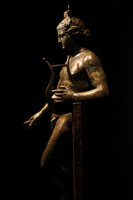
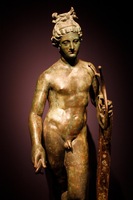
Musical Instrument - lyre - Lyre - Fotopedia Bronze Apollo with Lyre. Pompeii, House of Apollo
Luxury and decadence. Life on the Roman Gold Coast. Exhibition at the Museum Valkhof, Nijmegen. Until January 4, 2009. www.museumhetvalkhof.nl Icon_wikipedia Wikipedia Article Lyre — See encyclopedia photos
The lyre (from Greek λύρα - lyra) is a stringed musical instrument well known for its use in classical antiquity and later. The recitations of the Ancient Greeks were accompanied by lyre playing. The lyre of Classical Antiquity was ordinarily played by being strummed with a plectrum, like a guitar or a zither, rather than being plucked, like a harp. The fingers of the free hand silenced the unwanted strings in the chord. The lyre is similar in appearance to a small harp, but with certain distinct differences.
The word lyre can either refer specifically to a common folk-instrument, which is a smaller version of the professional kithara and eastern-Aegean barbiton, or lyre can refer generally to all three instruments as a family.
The term is also used metaphorically to refer to the work or skill of a poet, as in Shelley's "Make me thy lyre, even as the forest is" or Byron's "I wish to tune my quivering lyre,/To deeds of fame, and notes of fire"
ASTRA Project on the Grid Ancient instruments Sound/Timbre Reconstruction Application
http://www.astraproject.org/index.html
Project information
Archaeological data, such us fragments from excavations, written description pictures, etc, are quite ofter used to retrieve information about how things was working in the past.
In the ASTRA project, archaeological information are used by a quite large community of scientists and musicians working on the reconstruction of sound or timbre of ancient instruments (not existing anymore).
The physical modelling sound synthesis technique aims in fact to use a set of equations and algorithms that describe the physical materials used in the ancient instruments to generate physical source of sound. In other words, the basic idea is to recreate a model of the musical instrument and produce the sound by simulating its behaviour as a mechanical system.
For example, to model the sound of a drum, there would be a formula for how striking the drumhead injects energy into a two dimensional membrane. Thereafter the properties of the membrane (mass density, stiffness, etc.), its coupling with the resonance of the cylindrical body of the drum, and the conditions at its boundaries (a rigid termination to the drum's body) would describe its movement over time and thus its generation of sound.
Similar stages to be modelled can be found in instruments such as a violin, though the energy excitation in this case is provided by the slip-stick behaviour of the bow against the string, the width of the bow, the resonance and damping behaviour of the strings, the transfer of string vibrations through the bridge, and finally, the resonance of the soundboard in response to those vibrations.
Although physical modelling was not a new concept in acoustics and synthesis, having been implemented using finite difference approximations of the wave equation by Hiller and Ruiz in 1971, it was not until the development of the Karplus-Strong algorithm, the subsequent refinement and generalization of the algorithm into the extremely efficient digital waveguide synthesis by Julius O. Smith III and others, and the increase in DSP power in the late 1980s that commercial implementations became feasible.
Physical modelling is a really computing intensive technique since the complex models of the musical instruments are solved by integrating numerical coupled differential equations. To correctly reproduce a sound lasting for 30 seconds more than 4 hours of CPU would be required. The ASTRA application package, would produce one or more sounds corresponding to different configurations of the instrument (i.e., different notes).
The ASTRA project is a multi disciplinary project aiming at reconstructing the sound or timbre of ancient instruments (not existing anymore) using archaeological data as fragments from excavations, written descriptions, pictures.
The technique used is the physical modeling synthesis, a complex digital audio rendering technique which allows modeling the time-domain physics of the instrument.
In other words the basic idea is to recreate a model of the musical instrument and produce the sound by simulating its behavior as a mechanical system. The application would produce one or more sounds corresponding to different configurations of the instrument (i.e. the different notes).
Lost Sounds Orchestra www.lostsoundsorchestra.org
The Lost Sound Orchestra is the ASTRA project orchestra. It is a unique orchestra made by reconstructed ancient instrument coming from the ASTRA research activities. It is the first ensemble in the world composed of only reconstructed instruments of the past. Listening to it is like jumping into the past, in a sound world completely new to our ears.
Abstract: "Il progetto ASTRA: la ricostruzione di strumenti musicali antichi e le moderne tecnologie di calcolo” Domenico Vicinanza (CERN e Conservatorio di Salerno) ASTRA (Ancient instrument Sound/Timbre Reconstruction Application) è un progetto coordinato dal Conservatorio di Musica di Salerno per la ricostruzione del suono di strumenti antichi (dei quali non esistono più esemplari) utilizzando metodologie avanzate di modellazione al calcolatore. La tecnica utilizzata per ricreare il timbro degli strumenti musicali si chiama "sintesi per modelli fisici" (physical modeling) ed è basata sulla simulazione del comportamento fisico dello strumento attraverso equazioni matematiche ed algoritmi che ne descrivono la struttura e le reazioni agli stimoli (soffio, percussione, pizzico, sfregamento). Ad esempio, per ricostruire il suono di un tamburo si mette a punto matematicamente, attraverso complessi sistemi di equazioni, una membrana elastica simile a quella dello strumento da studiare. Le informazioni di base sono tipicamente resti archeologici, descrizioni prese dalla letteratura, campioni di materiali, raffigurazioni pittoriche che forniscono preziosi ragguagli circa i materiali, le forme e le tecniche musicali utilizzate per produrre il suono. La sintesi per modelli fisici risale agli anni '80 ed e' attualmente una delle più promettenti strategie di sintesi del suono ed una delle più interessanti per le infinite potenzialità. Da allora il suo sviluppo è andato avanti sul piano teorico ma sono sempre mancate applicazioni di rilievo a causa degli alti costi computazionali; per questo motivo il progetto ASTRA si avvarrà della tecnologia più avanzata al momento per il calcolo distribuito su scala internazionale, il "Grid computing", ovvero la computazione distribuita su larga scala. I primi test delle applicazioni per ricostruire il suono degli strumenti antichi su Grid sono stati effettuati con successo a luglio sull'infrastruttura di calcolo GILDA (https://gilda.ct.infn.it, un laboratorio virtuale creato dall'INFN destinato alle attività di formazione e training), riproducendo il suono di un monocordo con struttura risonante in legno. Attualmente si sta lavorando sulla ricostruzione di una lyra a quattro corde e sulla modellazione degli strumenti a fiato.
Sound of Long-Lost Ancient Greek Instruments Recreated by Computer
The long-lost sounds of the epigonion, the salpinx and the kithara could be about to form the strangest musical group yet, thanks to the world’s largest physics project. The epigonion, a harp-like musical instrument, was last played in Ancient Greece. But computer scientists have resurrected its sound as part of a project to conjure up an orchestra of long-lost instruments. They don’t know exactly what it looked like but they have used historical sources to re-create what it would have sounded like.
“It is a really interesting sound, metallic, crisp and bright,” said Domenico Vicinanza, a Cambridge-based engineer who worked with the Italian project Astra. “It fits perfectly in Middle Ages and baroque music ensembles, melding wonderfully with strings and woodwinds.”
At a conference in Italy at the weekend, musicians played ancient scores on the epigonion, using an electronic keyboard that simulated its sound.
Now the team is working to bring more old instruments back to life. Next on their list are the salpinx, a trumpet-like instrument of the Ancient Greeks, and the kithara, a type of lyre that was played in the courts of Rome and Athens.
The ultimate aim is a concert played on instruments that have not been heard for more than 2,000 years. The idea and mathematical concepts behind remodelling early instruments have been around since the 1970s, but the amount of information that needed to be processed to put the theories into practice was too great for earlier computers.
Now researchers can tap into the massive computing power of the Grid, a network of computers set up to crunch the enormous amounts of data expected to spill out of the Large Hadron Collider at the CERN nuclear research centre near Geneva.
While the “big bang machine” suffered a catastrophic fault recently, and as a result, is likely to be switched off for at least a year, in the meantime the computing network designed to help to unlock the secrets of the Universe is being put to other uses – such as resurrecting the musical sounds of Ancient Greece.
An epigonion is similar to a modern harp or psaltery, and is mentioned in the works of Athenaeus, the Greek rhetorician and grammarian, in 183AD. Historians believe it was invented, or at least introduced to Greece, by Epigonus, a renowned musician from Ambracia in Epirus, a region that now straddles modern Greece and Albania.
Epigonus was given Greek citizenship as recognition of his great musical ability, having been the first person to pluck the strings of the epigonion with his fingers, instead of using a plectrum. The instrument, which Epigonus named after himself, had 40 strings of varying lengths.
The first instrument the Italian researchers worked on re-creating was a monochord, an instrument played by Pythagoras, the Greek mathematician and scientist. Monochord means “one string”, which was stretched over a soundbox. The successful remodelling of the monochord showed that the researchers could move on to re-create the sounds of other instruments.
This is done through data collected by archaeologists, engineers and historians, who help to describe the materials and shape of the ancient instrument.
This is all translated into a computer program that is run on hundreds of computers in Europe that make up the Grid. The process takes four hours to produce just 30 seconds of music.
But it should now be possible to create whole compositions based on the sounds of the epigonion. The researchers have already used the instrument and their efforts can be heard on the internet.
References AchaQian, Hr. 1979. Hayeren armatakan baQaran [Etymological Root Dictionary of Armenian], Vol. 4. Erevan: Erevan University. Badalì, Enrico. 1998. Strumenti musicali, musici e musica nelle celebrazione delle feste ittite. Texte der Hethiter, hrsg. von A. Kammenhuber, Hft. 14/1. Heidelberg: Carl Winter. Benveniste, Émile. 1993. Noms d’agent et noms d’action en indo-européen. Paris: Librairie d’Amérique et d’Orient Adrien Maisonneuve (reprint). Bolognesi, Giancarlo. 1980. L’Armenia tra Oriente e Occidente: Incontro di tradizioni linguistiche nei secoli che precedono e seguono la prima documentazione scritta. Transcaucasica II. Quaderni del Seminario di Iranistica, Uralo-Altaistica e Caucasologia dell’Università degli studi di Venezia, Venezia, 26-42. Brown, J. P. 1965. Kothar, Kinyras and Kythereia. Journal of Semitic Studies 10.197-219. Chantraine, Pierre. 1973, 1986. Grammaire homérique, I-II. Paris: Klincksieck. Chantraine, Pierre. 1979. La formation des noms en grec ancien. Collection Linguistique publiée par la Société de Linguistique de Paris, XXXVIII. Paris: Klincksieck (nouveau tirage). Chantraine, Pierre. 1984. Dictionnaire étymologique de la langue grecque. Paris: Klincksieck (nouveau tirage). C‹erny!, J. 1976. Coptic Etymological Dictionary. Camridge: Cambridge University Press. Duchesne-Guillemin, Marcelle. 1980. Sur la restitution de la musique hourrite. Revue de musicologie 66. Duchesne-Guillemin, Marcelle. 1982. Découverte de l’origine de la musique occidentale. Bulletin de la Société liégeoise de musicologie 39.3-18. Duchesne-Guillemin, Marcelle. 1984. A Hurrian Musical Score from Ugarit: The Discovery of Mesopotamian Music. Sources from the Ancient Near East, 2/2, Malibu, CA: Undena. Duchesne-Guillemin, M. 1989. Sur la lyre-kithara géante. Archaeologica Iranica et Orientalia. Miscellanea in honorem L. Van den Bergh, ed. L. de Mayer et E. Haerinck (I. Gente), 128-134. Dzhaukyan, Gework B. 1967. OÇerki po istorii dopis’mennogo perioda armjanskogo jazyka [Essays on the History of the Preliterary Period of Armenian]. Erevan: Izdatel’stvo Akademii Nauk Armjanskoj SSR. Elizarenkova, Tatjana Ja. (ed., transl.). 1989-1995. Rigveda. Mandaly I-IV, Mandaly V-VIII. Literaturnye pamjatniki. Moscow: Nauka. Elizarenkova, Tatjana Ja., and Vladimir N. Toporov. 1973. Trita v kolodce: vedijskij variant arxaiÇnoy sxemy [Trita in the well: A Vedic variant of an archaic scheme]. Sbornik statej po vtoriÇnym modelirujuÍÇim sistemam. Ellenbogen, Maximilian. 1962. Foreign Words in the Old Testament. Their Origin and Etymology. London: Luzac and Co., Ltd. Ellermeier, F. 1970. Beiträge zur Frühgeschichte altorientalischer Saiteninstrumente. Archaeologie und Altes Testament, Festschrift für Kurt Galling zum 8. Januar 1970, hrsg. von A. Kuschke und E. Kutsch. Tübingen: Mohr. Ernout, Alfred, and Antoine Meillet. 1994. Dictionnaire étymologique de la langue latine. Histoire des mots. Paris: Klincksieck (retirage de la 4 éd.). Èrnstedt, P. V. 1953. Egipetskie zaimstvovanija v greÇeskom jazyke [Egyptian Borrowings in Greek]. Moscow-Leningrad: Izdatel’stvo Akademii Nauk SSSR. Èrnstedt (= Jernstedt), P. 1959-1961. Aus dem Gebiet der ältesten Ägyptizismen der griechischen Sprache. Bibliotheca Classica Orientalis 43.176; 62.105-112. Èrnstedt, P. V. 1962 “More” i “moreplavanie” v slovarnyx egiptizmax axejskoj reÇi [La “mer” et la “navigation” dans les égyptismes lexicaux de la langue achéenne]. Drevnij mir. Akademiku V. V. Struve [The Ancient World. V. V. Struve Festschrift], 513-519. Moscow: Nauka, Izdatel’stvo vostoÇnoj literatury. Friedrich, Johannes. 1952. Hethitisches Wörterbuch. Heidelberg: Carl Winter. Gamkrelidze, Thomas, and Vyacheslav Ivanov. 1995. Indo-European and Indo-Europeans, I-II. Berlin-New York: De Gruyter. Gevorgian, A. 1973. Remesla i byt v armjanskix miniatjurax [Handicraft and Everyday Life in the Armenian Miniatures]. Erevan. Gordon, Cyrus H. 1967. Ugaritic Textbook. Glossary, Indexes. Analecta Orientalia 38. Roma: Pontificium Institutum Biblicum. Gurney, O., and B. Lawergren. 1988. Ancient Mesopotamian Terminology for Harps and Sound Holes. Archives of Early Musical Culture, ed. E. Hickman, D. W. Hughes. Orpheus Schrifterreihe zu Grundfragen der Musik, 53. Bonn: Verlag für systematische Musikwissenschaft. Haas, V. 1984. Corpus der Hurritischen Sprachdenkmäler. 1 Abteilung. Die Texte aus Bog*azköy, Bd. 1. Die Serien itkaßi und itkalzi, Rituale für TaÍmiÍarri und Tatußepa sowie weitere Texte mit Bezug auf TaÍmiÍarri. Roma: Multigrafice editore. Hrozny!, Friedrich. 1916. Die Sprache der Hethiter, ihr Bau und Zugehörigkeit zum indogermanischen Sprachstamm. Ein Entzifferungsversuch. Boghazköi- Studien, hrsg. von Otto Weber, 1. Heft. Leipzig: J. C. Hinrichs. Ivanov, VjaÇeslav Vs. 1982. K ètimologii nekotoryx migracionnyx kul’turnyx terminov, 2. Xattskie muzykal’nye terminy v drevnevostoÇnyx jazykax [On the Etymology of Some Migratory Cultural Terms, 2. Hattic Musical Terms in the Languages of the Ancient Orient]. Ètimologija 1980.160-163. Ivanov, VjaÇeslav Vs. 1985. Ob otnoÍenii xattskogo jazyka k severozapadnokavkazskim [Hattic and North Caucasian]. Drevnjaja Anatolija [Ancient Anatolia], 26-59, ed. B. Piotrovskij, V. G. Ardzinba, V. V. Ivanov. Moscow: Nauka, glavnaja redakcija vostoÇnoj literatury. Ivanov, Vyacheslav Vs. 1999. Palatalization and Labiovelars in Luwian. Proceedings of the Tenth Annual UCLA Indo-European Conference, Los Angeles, May 21-23, 1998, 27-48, ed. K. Jones-Bley, M. E. Huld, A. della Volpe, and M. R. Dexter. Washington, D.C.: Institute for the Study of Man (JIES Monograph 32). Ivanov, Vyacheslav Vs. 1999a. A Semiotics of Sound Texts: Diachronical Dimension. Elementa, Journal of Slavic Studies and Comparative Cultural Semiotics 4.3 [in press]. KatiÇic!, Radoslav. 1976. Ancient Languages of the Balkans, Pt. 1. Trends in Linguistics. State-of-the-Art-Reports 4. The Hague/Paris: Mouton. Kilmer, A. D. 1974. The Cult Song with Music from Ancient Ugarit: Another Interpretation. Revue d’assyriologie et d’archéologie orientale 68.69-82. Koller, H. 1956. Das kitharodische Prooimion: eine formgeschichtliche Untersuchung. Philologus 100.159-206. Korostovcev, Mixail A. 1967. FonologiÇeskaja sistema novoegipetskogo jazyka [The Phonological System of Neo-Egyptian]. EllinistiÇeskij BliÛnij Vostok, Vizantija i Iran. Istorija i filologija [The Hellenistic Near East, Byzantium and Iran. History and Philology], 25-43. Moscow: Nauka, glavnaja redakcija vostoÇnoj literatury. Lambert, W. G. 1989. Notes on a Work on the Most Ancient Semitic Literatures. Journal of Cuneiform Studies 41.1 (Spring).1-33. Landsberger, Bruno. 1958. Materialen zum sumerischen Lexikon, Bd. VI. Rom. Laroche, Emmanuel. 1980. Glossaire hourrite. Études et commentaires 93. Paris: Klincksieck. Lawergren, Bo. 1998. Distinctions among Canaanite, Philistine and Israelite Lyres, and Their Global Lyrical Contexts. Bulletin of the American Schools of Oriental Research 309 (February).41-69. Lehmann, Winfried P. 1986. A Gothic Etymological Dictionary. Leiden: E. J. Brill. Loprieno, Antonio. 1998. Ancient Egyptian: A Linguistic Introduction. Cambridge: Cambridge University Press (reprint, 1 ed. 1995). de Martino, Stefano. 1988. Il Lessico musicale ittita. Hethitica IX (Bibliothèque des Cahiers de l’Institut de Linguistique de Louvain, 43), 5-16. Louvain- La-Neuve: Peeters. Masson, Émilia. 1967. Recherches sur les plus anciens emprunts sémitiques en grec. Paris: Klincksieck. Melchert, H. Craig. 1994. Anatolian Historical Phonology. Amsterdam/ Atlanta, GA: Rodopi. Mkrtschjan, N. 1974. Neue hethitisch-armenische lexikalische Parallelen. Acta Antiqua Academiae Scientiarum Hungaricae XXII1-4.313-319. Nagy, Gregory. 1990. Pindar’s Homer. The Lyric Possession of an Epic Past. Baltimore and London: The John Hopkins University Press. Nagy, Gregory. 1996. Poetry as Performance. Homer and Beyond. Cambridge: Cambridge University Press. Nikolayev, Sergei, and Sergei Starostin. 1994. A North Caucasian Etymological Dictionary. Moscow: Asterisk. Norborg, Ake. 1995. Ancient Middle Eastern Lyres (Musikmuseets skrifter 25). Stockholm/Copenhagen: Jespersen Offset Aps. Pettinato, G. 1982. Testi lessicali bilingue della biblioteca L. 2769. In collaborazione con E. Arcari, A. Magi-Spinetti e G. Visicato, Materiali epigrafici di Ebla, 4. Napoli: Istituto universitario orientale. Polivanov, Evgenij D. 1968. Stat’i po obÍÇemu jazykoznaniju. Moscow: Nauka, glavnaya redakciya vostoÇnoy literatury [published in English as: Works in General Linguistics. The Hague: Mouton, 1974]. Renfrew, Colin. 1998. Word of Minos: the Minoan Contribution to Mycenaean Greek and the Linguistic Geography of the Bronze Age Aegean. Cambridge Archaeological Journal 82.239-264. Rüster, Christel, and Erich Neu. 1989. Hethitisches Zeichenlexikon. Inventar und Interpretation der Keilschriftzeichen aus den Bog*azköy-Texten. Wiesbaden: Otto Harrassowitz (StBoT Beiheft 2). Shibayama, Sakae. 1975. The Musical Instrument “kinnâru” at Mari and “knr”. Oriento. Bulletin of the Society for Near Eastern Studies in Japan 182.49-63 [in Japanese]. S‹ifman, I. S‹. (ed., transl.). 1993. Ugaritskij epos [Ugaritic Epic]. Pis’mennye pamjatniki Vostoka [Written Monuments of the East]. Moscow: Nauka, izdatel’skaja firma “VostoÇnaia literatura”. Snell, Bruno (ed.). 1981. Früh-griechische Lyriker, 3 Teil. Sappho, Alkaios, Anakreon. Schriften und Quellen der Alten Welt, Bd. 24,3. Berlin: Akademie-Verlag. Szemerényi, Oswald. 1960. Gothic auhuma and the so-called comparatives in -uma-. Beiträge zur Geschichte der Deutschen Sprache und Literatur (Tübingen) 82.1-30. Szemerényi, Oswald. 1999. Introduction to Indo-European Linguistics. Oxford: Oxford University Press (reprint of 1996 edition). Thiel, Hans-Jochen. 1977. Der Text und die Notenfolgen des Musiktextes aus Ugarit. Studi Micenei ed Egeo-Anatolici, fasc. XVIII (= Incunabula Graeca, vol. LXVII), 109-136. Roma: Edizioni dell’Ateneo & Bizarri. Thumb, Albert (ed. Richard Hauschild). 1959. Handbuch des Sanskrit, II T. Formenlehre. Heidelberg: Carl Winter. Toporov, Vladimir N. 1977. Avest. Yrita, Yraêtona, dr.- ind. Trita i dr. i ix indoevropejskie istoki [Avestan Yrita, Yraêtona, Old Indian Trita etc. and their Indo-European Origins]. Paideia XVI.3 (Serie Orientale, 8).41-65. Toporov, Vladimir N. 1977a. Ob otraÛenii odnogo indoevropejskogo mifa v drevnearmjanskoj tradicii [On a Trace of an Indo-European Myth in the Old Armenian Tradition]. Istoriko-filologiÇeskij Ûurnal 3.101-103. Toporov, Vladimir N. 1982. Tritá. Tríta, Frita. Mify narodov mira. Ènciklopedija [Myths of the Peoples of the World. Encyclopedic Dictionary], Vol. 2, 525-526. Moscow: Sovetskaja Ènciklopedija. Vine, Brent. 1998. Aeolic ˆrpeton and Deberbative *-etó- in Greek and Indo- European. Innsbruck: IBS (Vortr. u. kleinere Schriften 71). Vorreiter, Leopold. 1972. Altsemitische Schräglyren. Zeitschrift für die Musikforschung 271.72-79. Vorreiter, Leopold. 1972/1973. Westsemitische Urformen von Saiteninstrumenten. Mitteilungungen der Deutschen Gesellschaft für Musik des Orients (Berlin) 11.71-77. Vorreiter, Leopold. 1976. Die Musikinstrumente Europas im Altertum — welche Erkenntnisse liefern sie der Gegenwart? Archiv für Musikorganologie 1/1 (Dezember).34-48. Vorreiter, Leopold. 1977. Apollon-, Orpheus- und Thamyris-Lyren. Archiv für Musikorganologie 2.113-133. Vorreiter, Leopold. 1977a. Lyren der Illyroi. Archiv für Musikorganologie 2.68-85. Vorreiter, Leopold. 1979. Archaisch-antike Lyrenbaukunst — eine polyvalente Hochkunst. Archiv für Musikorganologie 3-4/1.14-30. Vorreiter, Leopold. 1979a. Riesenlyren der Altertums. Archiv für Musikorganologie 3-4/1.30-37. Watkins, Calvert. 1995. How to Kill a Dragon. Aspects of Indo-European Poetics. New York: Oxford University Press. Van Windekens, A.J. 1964. Considérations sur quelques mots grecs d’origine pélasgique. Orbis 131.236-239. West, Martin L. 1981. The Singing of Homer and the Modes of Greek Music. Journal of Hellenic Studies 101.113-129. West, Martin L. 1986. The Singing of Hexameters: Evidence from Epidaurus. Zeitschrift für Papyrologie und Epigraphik 63.39-46. West, Martin L. 1988. The Rise of the Greek Epic. Journal of Hellenic Studies 108.151-172. West, Martin L. 1992. Ancient Greek Music. Oxford: Oxford University Press. West, Martin L. 1994 The Babylonian Musical Notation and the Hurrian Melodic Texts. Music and Letters 752.161-174. Ziegler, Chr. 1979. Catalogue des instruments de musique égyptiens. Paris: Édition de la Réunion des Musées Nationaux.
Lirata_na_Orfei_1Казанлъшкият лютиер Адриан Андреев възстанови Лирата на Орфей. Проучването и изработката на инструмента му отнели 3 месеца. Възстановката е поръчка на Общински институт „Старинен Пловдив” по случай 40-ия празник на Стария град.
Възстановената Лира на Орфей ще огласи Античния театър в събота вечерта (12 септември), когато Общинският институт „Старинен Пловдив” ще отбележи своя 40-и празник.
Милена Вълчева
Milena_Valcheva_Lirata_na_Orfei_1На уникалния интструмент ще свири Милена Вълчева от китарното Дуо Вълчеви. Тя е майстор на класическата китара и е избрана да презентира Лирата на Орфей, направена от лютиера Адриан Андреев по описание на автори от древността. Милена Вълчева ще изсвири 6 химна на митичния тракийски певец, запазени в старогръцки хроники.
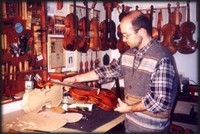
Лютиерът Адриан Андреев
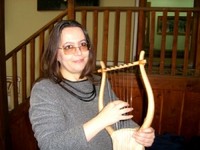
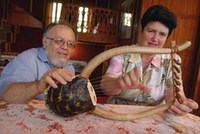
Adrian_Andreev_1Инструментът е 7-струнен, колкото са планетите на Слънчевата система. Рамената на лирата са изработени от сърцевината на явор. Акустичната кутия е съставена от коруба на костенурка, покрита с ярешка кожа, която изпълнява функцията на мембрана. Инструментът е изработен от 44-годишния лютиер Адриан Андреев от Казанлък. Лирата е около 45 сантиметра и има седем струни. Струните на истинската лира на Орфей са били изработени от изсушени котешки черва. При възстановката на инструмента това условие на може да бъде изпълнено по етично хуманни причини – споделя лютиерът. Струните на възстановката са найлонови, предназначени за класическа китара.
„Lirata_na_OrfeiИмаме данни, че оригиналната лира е била изработена от рога на козел, покрити целите в злато. Боговете обаче отнемат тази лира от Орфей и впоследствие той изработва инструмент, по който сме се водили при направата“ – казва майсторът.
Орфей омайвал с музиката си не само хората, но и зверове и природа – гласи легендата за тракийския певец. Музиката от лирата му имала лечебни свойства.
„Нямаме информация с какви тонове е настройвал лирата си Орфей, затова си позволих да я настроя по свой начин – три струни са с тонове ми, а по две – с тонове си и сол. Тоналността е в ми минор” – разкрива изпълнителката Милена Вълчева.
Лирата на Орфей
10 Сеп 2009 ... Казанлъшкият лютиер Адриан Андреев възстанови Лирата на Орфей. Проучването и изработката на инструмента му отнели 3 месеца. ... razkritia.com/български-лютиер-възстанови-лирата-н/
26 август 2009 | 11:10 | Агенция "Фокус" Пловдив. Казанлъшкият майстор на лири Андреан Андреев възстанови лирата на Орфей. Това съобщи за кореспондента на Агенция “Фокус” Весела Илиева, директор на Общински институт „Старинен Пловдив". Това е един от най-добрите майстори на лири у нас, каза Илиева. Възстановен е дървеният вариант на лирата на Орфей по снимки, като инструментът е направен в строй. На него може да се свири реално. Орфеевата лира е висока 40 сантиметра и е изработена от яворово дърво и коруба на костенурка. Лирата на Орфей се възстановява по съвместен международен проект Италия – Испания - България, а изпълнител на проекта от българска страна е Общински институт „Старинен Пловдив", уточни Илиева. Идеята е реставрирането на антични музикални инструменти, записване на музика за тях от съвременни композитори и изсвирването на тази музика на този инструмент. Проектът е на обща стойност 150 000 евро. Предстои написването на музика за лирата на Орфей, а на 12 септември, на сцената на Античния театър в Пловдив, на финален концерт по проекта, античната лира ще прозвучи в реално време. Цветана ТОНЧЕВА
Andrean Andreev, a lyre master from the town of Kazanlak, Central Bulgaria, has reproduced the lyre of legendary Orpheus, the Old Plovdiv Municipal Institute reported. This has become possible thanks to an international project involving Italy, Spain and Bulgaria. The project’s idea is to restore ancient music instruments and to use them to perform and record music by contemporary composers. For the first time the reproduced instrument can be heard on 12 September on stage the Roman Theater in Plovdiv.
28 August 2009 | The lyre of Orpheus, the string instrument which the Thracian and ancient Greek mythological musician played with mastery, was recreated and will be displayed in the Bulgarian city of Plovdiv as part of a project of the Municipal Institute Ancient Plovdiv, its representatives recently announced. The instrument, which is 40 centimetres long, was made from cycamore tree and a turtle’s hollow. According to national media, although the original idea was to make the instrument from materials that were as close as possible to the authentic ones, it turned out that no animal species existed from which to get 45-centimetre-long horns.
The lyre was recreated as part of a 150,000-euro project between Bulgaria, Spain and Italy.
The model of the instrument will be officially presented on September 12 in Plovdiv’s Ancient Theatre. According to national media, a film which tells the story of the ancient lyre’s recreation is also in the works.
The legendary figure of Orpheus was venerated by the Thracians and ancient Greeks as the most gifted poet and musician and the perfector of the lyre invented by Hermes. According to legend, with his music and singing, Orpheus could charm birds, fish and wild beasts, coax the trees and rocks into dance, and even divert the course of rivers.
Perhaps the best-known myth about Orpheus is his descent into the Underworld and with his music softened the hearts of Hades and Persephone, who agreed to allow his dead wife Eurydice to return with him to earth on one condition: he should walk in front of her and not look back until they both had reached the upper world. But his anxiety made him look back as soon as he reached the upper world and she vanished forever. Orpheus nevertheless remains one of the handful of Greek heroes to visit the Underworld and return.
''Újraalkották Orpheusz lantját Bulgáriában - húros hangszer elkészítése egy 150 ezer eurós (41 millió forintos) bolgár, olasz és spanyol közös projekt része.
Orpheusz - thrákiai énekes és lantjátékos a görög mitológiában. Kalliopé múzsa és Apollón (vagy Oiagrosz thrák folyóisten) fia. Muzsikájával az egész természetet, így az állatokat, köveket és fákat is elbűvölte - olvasható a Balkantravellers című angol nyelvű bolgár hírportálon.
Miután hitvese, Eurüdike kígyómarásba belehalt, Orpheusz alászállt az Alvilágba, hogy az ottani istenek szívét meglágyítva visszahozza őt az élők közé. Az Alvilág ura elengedte Eurüdikét azzal a feltétellel, hogy felfelé vezető útjukon Orpheusz mögött halad, aki eközben nem néz vissza. Orpheusz azonban megfeledkezett a tilalomról, így örökre elvesztette szerelmét. Bánatában Thrákia hegyei között bolyongott, ahol, a helybéli nők, kikre ügyet sem vetett, széttépték. Orpheusz holttestének szétszórt darabjait a Múzsák temették el.
Ami Orpheusz hangszerét illeti, a legenda szerint ez volt a világ első lantja, Hermész (Zeusz és Maia fia) készítette. Hermész születése után gyorsan növekedett, hamarosan kikelt bölcsőjéből. A barlang bejárata közelében kószált, amikor egy teknősre lett figyelmes. Hermész megragadta az állatot, a barlangba vitte, majd testét kifejtette teknőjéből, s a páncélt fúrni-faragni kezdte, a húrok juhbélből készültek. Később Hermész a lantot bátyjának, Apollónak ajándékozta, aki továbbadta fiának, Orpheusznak.
A XXI. századi lantkészítők 40 centiméteres hangszert autentikus alapanyagokból - szikomorfából és teknőspáncélból készítették el. A lantot szeptember 12-én mutatják be hivatalosan Plovdiv ókori színházában.''
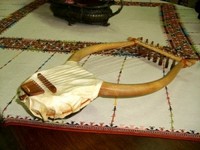
A khelüsz-líra (ógörög χέλυς, χελώνη = ’teknős’) pengetős hangszer, az ókori görög lírák családjának tagja. Jellemzője, hogy testét egy teknőc hátpáncélja – vagy hasonló formájú, fából csészeformára kivájt hátrész – és az arra dobszerűen kifeszített bőr alkotja. Legtöbbször hét egyenlő hosszúságú bélhúrja van, amelyek a teknőcpáncélra feszített bőrhöz csatlakozó húrlábon áthaladva a testből kinyúló két szarvszerű nyúlvány közötti keresztrúdhoz futnak.
A görögöknél a kitharához hasonlóan nagyra becsült, népszerű hangszer volt, elsősorban zenetanulásra, műkedvelő házi muzsikálásra, társas összejöveteleken használták. Tartalomjegyzék
A homéroszi eposzokban sem a líra, sem a khelüsz szó nem fordul elő, a lírafélék családjába tartozó pengetős hangszerek phorminx és kitharisz néven szerepelnek. Semmi nem utal arra, hogy bármelyikük a teknős páncéljával lenne kapcsolatban, ezek minden bizonnyal fából készült dobozlírák voltak.[1] A khelüsz és a líra szavak egymásra vonatkoztatva először a Hermész-himnuszban[2] bukkannak fel, amelyből megismerhetjük a teknőcből készült líra feltalálásának mitikus történetét. A későbbiekben a líra szó önmagában hol ezt a hangszerváltozatot jelölte, hol pedig általánosabb értelemben a líraformájú hangszereket. Csak a Kr. e. 4. századtól különült el újra élesen a líra mint teknőclíra, illetve kithara mint fából készült dobozlíra fogalma.[3] A khelüsz, khelunna szavak[4] a költészetben gyakran önmagukban is a teknőclírát jelölik.[5]
A khelüsz-líra legelső ismert képi ábrázolásai a Kr. e. 8. század végéről, a Kr. e. 7. század elejéről származó néhány geometrikus, szubgeometrikus edényen találhatók. A líra szó legelőször Arkhilokhosz Kr. e. 7. századi költő egy töredékében bukkan fel. Egy feketealakos vázaképen a hangszer képe és a líra felirat együtt is szerepel.[6]
Leírása
A khelüsz-líra hangszertani besorolása alapján a csészelírák családjába tartozik, ami azt jelenti, hogy húrjainak rezgését hangként kisugárzó hangszerteste nem dobozszerű felépítésű, mint a dobozlírák esetében, hanem tál- vagy csészeformájú.[7] Ez a test leggyakrabban egy teknőc hátpáncéljából és az arra kifeszített, pergamenszerűen kikészített marhabőr rezonánsból áll. Általános felépítése ezt leszámítva megegyezik a többi líraféleséggel: bélhúrjai (khordai) a test alsó részére rögzített húrtartótól (khordotonon) kiindulva a húrláb (magasz) érintésével a hangszertestből kinyúló két szimmetrikus nyúlványt (pékhüsz) összekötő vékony, hengerformájú keresztrúdhoz (zügon) futnak. Behangolásához húrjainak feszességét a végükhöz rögzített, a keresztrúd körül elforgatható bőrgyűrűk, kóllopszok segítségével lehet beállítani. A többi görög líraféleséghez hasonlóan a hangszer elmaradhatatlan tartozéka a szilárd tartást segítő karpánt (telamón) és a zsineghez kötött pengető (pléktron), melyek a hangszernek a zenésztől távolabbi karjához csatlakoznak.[8] Húrozata a többi líraféleséghez hasonló, leggyakrabban héthúros.
Feketealakos kantharosz, Boiótia, Kr. e. 560 körül
Vörösalakos külix, Attika, Kr. e. 510 körül
Vörösalakos léküthosz, Attika, Kr. e. 470 – 460
Fehéralakos külix, Delphoi, Kr. e. 460 [szerkesztés] Használata Zeneóra khelüsz-lírán
Viszonylag kis méretének, súlyának köszönhetően a khelüsz-lírán mindenféle testhelyzetben, állva, ülve, sőt fekve, de menet közben, táncolva is lehetett játszani. A vázaképeken használója a testéhez szorítva, függőlegesen vagy előredöntve, néha vízszintes helyzetben tartja a hangszert, ebben a bal csuklójára hurkolt pánt, a telamón segíti.[9] A görög lírák családjának többi tagjával megegyezően a zenész a jobb kezében tartott pengetővel, pléktronnal pengeti a húrokat, közben a bal keze is részt vesz valamilyen módon a hangok előállításában. A lírajátékban a bal kéz szerepe máig vitatott kérdés, lehet, hogy pengette is, vagy csak tompította a húrokat, esetleg üveghangok keltésében működött közre.
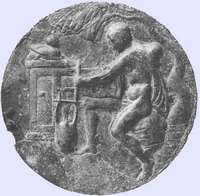
A hangszer legkorábbi ábrázolásai a Kr. e. 8. század végéről, a 7. század elejéről származnak. A líra már a korai vázafestményeken is a megjelenített személy arisztokratikus neveltetését, műveltségét, társadalmi státuszát hangsúlyozza ki. Ez a metaforikus szerepe a Kr. e. 5. században is fennmarad, amikor fiatalokkal, zenetanulással, múzsákkal kapcsolatos jelenetekben látható. Apollón, Párisz, Orpheusz is játszanak khelüsz-lírán; Thészeusz közelében is sokszor ott a hangszere, amíg a Minótaurosszal harcol, Ariadné vigyáz rá. A Kr. e. 5. század második felétől nemcsak múzsák, de halandó nők, polgárasszonyok is pengetik otthonukban.[10]
A khelüsz-líra az ókori görögök körében hasonlóan népszerű volt, mint a kithara, de vele ellentétben elsősorban a műkedvelő, házi muzsikálás, a zenetanulás, a családi események, házassági ceremóniák, táncok, lakomák hangszere volt, nem a nagy nyilvánosság előtti professzionális zenélésé; a szintén teknőcpáncélból készült hosszú karú barbitosz pedig inkább a tivornyák, a szerelem hangszere, dionüszoszi jelenetek szereplője volt. [szerkesztés] Felépítése
A Hermész-himnusz elég részletesen leírja, Hermész hogyan készítette el az első teknőclírát. A hangszertestet egy teknős kitisztított páncéljából alakította ki úgy, hogy homorú oldala fölött marhabőrt (δέρμα βοὸς) feszített ki. Ezután két kinyúló kart (πήχεις) épített a testbe, melyeket egy keresztrúddal (ζυγὸν) kötött össze. Végül hét juhbélből sodrott húrt (ἑπτὰ δὲ θηλυτέρων ὀίων χορδάς) feszített a keresztrúd és a test közé. Mikor elkészült, a hangszert pengetővel (πλη̂κτρον) próbálta ki.
A műveletsor elején, még a bőr kifeszítése előtt Hermész bizonyos nádszálakat (δόνακας καλάμοιο) metszett le „mértékkel” (μέτροισι), és ezeket valamilyen módon a teknőchéjhoz erősítette.[11] Ennek célja máig nem világos: vannak, akik a bőr rögzítésében adnak a nádaknak szerepet,[5] mások valamiféle szerkezetet megerősítő gerendázatot látnak benne[12] vagy a húrláb építési anyagaként értelmezik.[13]
A khelüsz-líra felépítéséről még pontosabb képet kaphatunk az ásatásokból előkerült maradványok,[14] a hangszert ábrázoló számos vázafestmény, korabeli irodalmi utalások alapján. [szerkesztés] Test Testudo marginata
A khelüsz-líra készítéséhez az Égei-tenger térségében élő teknőcfajok, elsősorban a nagyobb méretű szegélyes teknős (Testudo marginata), ritkábban a mór teknős (T. graeca) vagy a görög teknős (T. hermanni) páncélját használták fel.[15] Pauszaniasz szerint a Parthenio-hegyen találhatók a líra készítésére legalkalmasabb teknősök.[16] Az ismert líramaradványok eredetileg általában 20 cm-nél rövidebb teknőcből készültek, de úgy tűnik, a hangszertest méretei a rendelkezésre álló nyersanyagtól függően változatosak lehettek. Az ábrázolásokon megfigyelhető, hogy a líra hangdoboza általában rövidebb, mint a zenész alkarja.
Az összes ismert lírából származó teknőchéj-maradványon találhatóak apró, kifúrt lyukak, ezek részint a páncél gerincrészénél vannak, részint egyenlő távolságokban a pereménél. Az előbbiek a karok test belsejébe nyúló végeinek rögzítésében, az utóbbiak a bőr kifeszítésében kaphattak szerepet.[17]
A bőrnek a teknőcpáncélra való kifeszítéséről nem tudunk közelebbit; a hasonló elven felépülő más hangszerek ismeretében feltételezhető, hogy a bőrt nyersen, nedvesen, kisimított állapotban rögzíthették a teknőcpáncél pereme mentén, majd kiszáradása során a bőr természetes zsugorodása révén feszült meg. [szerkesztés] Karok
A Hermész-himnusz a líra karjait a pékhüsz szóval jelöli, ami szó szerint ’alkar’ jelentésű,[18] és ez jól fejezi ki hozzávetőleges hosszúságát is. A karok készítésére általában tömör keményfát használtak, a British Museumban őrzött hangszer[19] karjai (és a keresztrúdja is) szikomorfából[20] vannak. Későbbi korokban előfordulhatott, hogy állati szarvakat használtak erre a célra, erre utal a hangszer karjainak másik elnevezése, a kerata.
A görög teknőclírák két karját legtöbbször a teknős hátsó lábainak helyére ültették be.[21] Szemből nézve a karok a testből kiindulva először széttartanak, majd egymás felé hajlanak. Elképzelhető, hogy nemcsak síkban voltak íveltek, hanem oldalnézetből is enyhén megfeszített íjhoz voltak hasonlatosak.[22] A karok végei túlnyúlnak a keresztrúdon, de onnantól kezdve rendszerint vékonyabbak. Lírajátékost ábrázoló etruszk falfestmény
Keresztrúd
A líra karjait összekötő keresztrudat jelölő zügon szó[23] már az Iliászban előfordul,[24] de a Hermész-himnuszban is szerepel. Feladata a húrok végének rögzítése a húrtartóval ellentétes oldalon. A hangolást szolgáló bőrgyűrűk, kollopszok erre a hengeres testre hurkolódtak, ekörül foroghattak. Hogy a húrok feszítőerejének ellenálljon és a hangológyűrűk ne rágódjanak bele, keményfából – szikomorfából vagy tölgyfából[25] – készült.
A keresztrúdnak a karokhoz való illeszkedése egyáltalán nem világos, a vázafestők ezt a részletet elnagyoltan kezelik. Valószínűleg a keresztrúd végei felé egy-egy hosszúkás lyuk volt, ezek a kar elvékonyodó, hosszában félbevágott végére fűződtek fel. Ez a megoldás megakadályozta, hogy a keresztrúd elfordulhasson a rátekert feszes húrok forgatónyomatékától.[26]
Hangológyűrűk
A Kr. e. 5. század végéig, talán később is a lírák behangolásának szokásos módja elforgatható hangológyűrűk alkalmazása volt. Homérosznál[27] a neve kollopsz.[28] A vázafestményeken a hangológyűrűk a keresztrúdon kis dudorokként látszódnak. Ezek a húrok végére kötött bőrcsíkok, melyek a keresztrúdra tekerednek. Az így formálódó bőrgyűrűket a tapadási súrlódás tartja meg, de a zenész hangoláskor úgy tudja őket forgatni, hogy a húrok ezáltal feszesebbek vagy lazábbak legyenek. Sok afrikai népi hangszer napjainkban is ezt a hangolási eszközt alkalmazza.[29] [szerkesztés] Húrok
Mint minden antik líraféleség, a teknőclíra is bélhúrokkal volt felszerelve.[30] Homérosznál a bélhúr, khordé[31] gyakori jelzője a „jól sodrott”, eüsztrephész.[32] A sztrephó ige[33] a kötelet alkotó rostok összecsavarását, sodrását is jelenti, eszerint feltételezhető, hogy a bélhúrokat – a napjainkban is alkalmazott technológiával megegyezően – több bél összesodrásával állították elő. Különböző számú bélszál összefonásával így különböző vastagságú húrokat lehetett készíteni. Erre nagy szükség volt, hiszen a líra egyenlő hosszúságú húrjainak lehetőleg azonos feszességűeknek is kellett lenniük, amit – azonos sűrűségű anyagot feltételezve – csak a vastagság variálásával lehetett megvalósítani.[34]
A líra húrjainak másik elnevezése, a neürai[35] arra utal, hogy állati ínt is használhattak húrkészítésre.
Húrláb és húrtartó
A lírák húrjainak a hangszertesten való rögzítésére illetve a húrok rezgésének átadására más-más alkatrész szolgál: az előbbi a húrtartó, az utóbbi a húrláb feladata, hasonlóan a mai alsó húrrögzítésű hangszerekhez. Hészükhiosz lexikona szerint a húrláb, a magasz[36] egy négyszögletes fadarab, amely a kithara húrjait hordozza, és a hangok létrehozását segíti. A teknőclíra-maradványok között nem maradt fenn ilyen alkatrész, a vázaképeken legtöbbször csak egy vastag, rövid fekete csík ábrázolja, ha egyáltalán látható. A húrtartó, a khordotonon[37] egy többszörösen meghajlított fémrudacska lehetett, melynek két vége a teknőcpáncélba fúrt nagyobb lyukakba illeszkedett, erre köthették rá a keresztrúdtól idefutó húrok alsó végeit.[38] [szerkesztés] Jegyzet
1. ^ David E. Creese (1997.) 67. o., lábjegyzet 2. ^ Hermész-himnusz (angolul)
3. ^ M. L. West (1992.) 51. o. 4. ^ Greek-English Lexicon – χέλυς
5. ^ a b M. L. West (1992.) 56. o. 6. ^ Sheramy D. Bundrick (2005.) 14. o. 7. ^ Erich M. v. Hornbostel, Curt Sachs: Systematik der Musikinstrumente – Chordophone (németül)
8. ^ David E. Creese (1997.) 87. o. 9. ^ Perseus Encyclopedia - Chelys-Lyra (angolul)
10. ^ Sheramy D. Bundrick (2005.) 14 – 15. o. 11. ^ John Gray Landels: Music in Ancient Greece and Rome, 1999, 64. o. szerint Szophoklész egy mondata arra utal, hogy a „lírája alól kivenni a nádat” kifejezés nagyjából egyet jelent azzal, hogy „kihúzni a lába alól a talajt”. 12. ^ Thomas J. Mathiesen (1999.) 240. o. 13. ^ A Dictionary of Greek and Roman Antiquities (1890), 2. bek.
14. ^ David E. Creese (1997.) 88. o. szerint líra testét alkotó teknőcpáncél maradványok Arta, Basszai, Argosz, Eleuszisz, Kerküra, a calabriai Lokroi Epizephüroi ásatásaiból kerültek elő, mind az archaikus és a klasszikus korból; Mélosz szigetén bronzkori töredékek is felbukkantak. 15. ^ David E. Creese (1997.) 88. o. 16. ^ „Mount Parthenius rears also tortoises most suitable for the making of harps; but the men on the mountain are always afraid to capture them, and will not allow strangers to do so either, thinking them to be sacred to Pan.” Pauszaniasz: Görögország leírása 8.54.7 (angolul)
17. ^ David E. Creese (1997.) 88. - 90. o. 18. ^ Greek-English Lexicon – πῆχυς
19. ^ Thomas J. Mathiesen (1999.) szerint GR 1816.6-10-501 számon 20. ^ Az angol sycamore szó sok félreértést szokott okozni, Angliában egy juharfajt, az Acer pseudoplatanust jelöli, az Egyesült Államokban pedig egy platánt, a Platanus occidentalist. A Bibliában is emlegetett szikomorfa, a Ficus sycomorus egy Egyiptomban, Palesztinában honos fügefaj. Faanyaga az előbbiekkel ellentétben igen kemény. 21. ^ David E. Creese (1997.) 49. o. 22. ^ Sheramy D. Bundrick (2005.) 17. o. szerint a Timokratész festő egy vázaképén oldalnézetből ábrázolt líra ezt erősíti meg. 23. ^ Greek-English Lexicon – ζυγόν
24. ^ Iliász, 9.186-189 (angolul)
25. ^ Thomas J. Mathiesen (1999.) 238. o. szerint Theophrasztosz A növények természetrajza című művében említi a tölgy faanyagának ilyen felhasználását, valószínűleg ez a magyaltölgy (Quercus ilex) lehetett. 26. ^ David E. Creese (1997.) 94. o. 27. ^ Odüsszeia 21.407
28. ^ Greek-English Lexicon – κόλλοψ
29. ^ David E. Creese (1997.) 96. o. 30. ^ Hermész-himnusz 1.51 (angolul)
, valamint Odüsszeia, 21.404 (angolul)
31. ^ Greek-English Lexicon – χορδή
32. ^ Greek-English Lexicon – ἐυστρεφής
33. ^ Greek-English Lexicon – στρέφω
34. ^ David E. Creese (1997.) 99. - 100. o. 35. ^ Greek-English Lexicon – νευρά
36. ^ Greek-English Lexicon – μαγάς
37. ^ Greek-English Lexicon – χορδοτόνον
38. ^ David E. Creese (1997.) 100. - 103. o.
[szerkesztés] Források
* Hermész-himnusz (angolul)
* Perseus Encyclopedia - Chelys-Lyra (angolul)
* David E. Creese: The Origin of the Greek Tortoise-Shell Lyre, 1997. (angolul)
– ISBN 061-224-822-4 * M. L. West: Ancient Greek Music, Oxford University Press, 1992. (angolul) – ISBN 019-814-975-1 (korlátozott online hozzáférés)
* Thomas J. Mathiesen: Apollo's Lyre: Greek Music and Music Theory in Antiquity and the Middle Ages, University of Nebraska Press, 1999 (angolul) – ISBN 080-323-079-6 (korlátozott online hozzáférés)
* Sheramy D. Bundrick: Music and Image in Classical Athens, Cambridge University Press, 2005 (angolul) – ISBN 052-184-806-7 (korlátozott online hozzáférés)
Lyra [image ALT: An engraving depicting a device in the shape of the two horns of a cow, towards the tips of which a cross-slat has been fastened from one to the other; from this slat to the base of the horns run four strings. It is a Graeco-Roman lyre.] Article by Leonhard Schmitz, Ph.D., F.R.S.E., Rector of the High School of Edinburgh on pp720‑721 of William Smith, D.C.L., LL.D.: A Dictionary of Greek and Roman Antiquities, John Murray, London, 1875.
LYʹRA (λύρα, Lat. fides), a lyre, one of the most ancient musical instruments of the stringed kind. There can scarcely be any doubt that this and similar instruments were used by the Eastern nations and by the Egyptians, long before the Greeks became acquainted with them, and that they were introduced among the Greeks from Asia Minor (Wilkinson's Manners and Cust. of the Anc. Egypt. II pp272, 288, &c.). The Greeks themselves however attributed the invention of the lyre to Hermes, who is said to have formed the instrument of a tortoise-shell, over which he placed gut-strings (Hom. Hymn. in Merc.; Apollod. III.10 §2; Diodor. V.75; Serv. ad Virg. Georg. IV.464). As regards the original number of the strings of a lyre, the accounts of the ancients differ so widely, that it is almost impossible to arrive at any definite conclusion. Diodorus (I.16) states that Hermes gave his lyre three strings, one with an acute, the other with a grave, and the third with a middle sound. Macrobius (Sat. I.19) says that the lyre of Mercury had four strings, which symbolically represented the four seasons of the year; while Lucian (Deor. Dial. 7), Ovid (Fast. V.106), and others, assume that the lyre from the first had seven strings. All ancient writers who mention this invention of Hermes, apply it to the name lyra, though its shape in this description of Apollodorus and Servius rather resembles that of the instrument which in subsequent times was designated by the name cithara (κίθαρα or κίθαρις), and in some degree resembled a modern guitar, in as far as the latter the strings were drawn across the sounding bottom, whereas in the lyra of later times they were free on both sides. In the Homeric poems the name λύρα does not occur, with the exception of the Homeric hymn to Hermes; and from the expression which occurs in this hymn (423), λύρῃ κιθαρίζειν, it appears that originally there was very little or no difference between the two instruments, that is to say, the instrument formerly used was a cithara in the later sense of the word.a
The instruments which Homer mentions as used to accompany songs are the φόρμιγξ and κίθαρις (Il. I.603, Od. VIII.248 and 261). Now that the φόρμιγξ and the κίθαρις were the same instrument, appears to be clear from the expression φόρμιγγι κιθαρίζειν, and κίθαρι φορμίζειν (Od. I.153, &c.). The lyra is also called χέλυς, or χελώνη, and in Latin testudo, because it was made of a tortoise-shell.
The obscurity which hangs over the original number of strings of the lyre, is somewhat removed by the statement made by several ancient writers, that Terpander of Antissa (about B.C. 650) added to the original number of four strings three new ones, and thus changed the tetrachord into a heptachord (Euclid. Introd. Harm. p19; Strab. XIII p618; Clem. Alex. Strom. VI p814, ed. Potter), p721though it cannot be denied that there existed lyres with only three strings (Blanchini, De Tribus Generibus Instrumentorum Musicae Veterum Organicae Dissertatio, tab. IV). The preceding representation of a tetrachord and the following one of a heptachord are both taken from the work of Blanchini.
[image ALT: An engraving depicting a device in the shape of the two horns of an oryx or antelope, towards the tips of which a cross-slat has been fastened from one to the other; from this slat to the base of the horns run seven strings, and below that base is attached a tortoise shell. It is a Graeco-Roman lyre.] The heptachord introduced by Terpander henceforth continued to be most commonly used by the Greeks as well as subsequently by the Romans, though in the course of time many additions and improvements were made which are described below. In the ancient tetrachord the two extreme strings stood to each other in the relation of a fourth (διὰ τεσσάρων), i.e. the lower string made three vibrations in the time that the upper one made four. In the most ancient arrangement of the scale, which was called the diatonic, the two middle strings were strung in such a manner, that the three intervals between the four strings produced twice a whole tone, and one semi-tone. Terpander in forming his heptachord, in reality added a new tetrachord to the ancient one, but left out the third string of the latter, as there was between it and the fourth only an interval of a semi-tone. The heptachord thus had the compass of an octave, or, as the ancients called it, a diapason (διὰ πασῶν). The intervals between the seven strings in the diatonic scale were as follow:— between one and two a whole tone, between two and three a whole tone, between three and four a whole tone and a semi-tone; between four and five and five and six a whole tone each, between six and seven a semi-tone. The seven strings themselves were called, beginning from the highest, νήτη, παρανήτη, παραμέση, μέση, λιχανός, παρυπάτη, ὑπάτη (Böckh, de Metris Pindari, p205, &c.). Pindar himself made use of the heptachord, though in his time an eighth string had been added. In the time of Philip and Alexander the number of strings were increased to eleven by Timotheus of Miletus (Suidas, s.v. Τιμόθεος; Müller, Dor. IV.6 §3), an innovation which was severely censured by the Spartans, who refused to go beyond the number of seven strings (Cic. de Leg. II.15; Athen. XIV p636).b It is however clear that the ancients made use of a variety of lyres, and in the representations which we still possess, the number of strings varies from three to eleven.c About the time of Sappho and Anacreon several stringed instruments, such as magadis, barbiton, and others, were used in Greece, and especially in Lesbos. They had been introduced from Asia Minor, and their number of strings far exceeded that the lyre, for we know that some had a compass of two octaves, and others had even twenty strings, so that they must have more resembled a modern harp than a lyre (Bode, Gesch. der Lyrisch. Dichtkunst der Hellenen, vol. I p382, &c.; compare Quinctil. XII.10).
It has been remarked above that the name lyra occurs very seldom in the earliest Greek writers, and that originally this instrument and the cithara were the same. But about the time of Pindar innovations seem to have been introduced by which the lyra became distinct from the cithara, the invention of which was ascribed to Apollo and hence the name of the former now occurs more frequently (Pind. Ol. X.113, Nem. III.19, XI.8, Pyth. VIII.42, et passim). Both however had in most cases no more than seven strings. The difference between the two instruments is described above; the lyre had a great and full-sounding bottom, which continued as before to be made generally of a tortoise-shell, from which, as Lucian (Dial. Mor. I) expresses it the horns rose as from the head of a stag. A transverse piece of wood connecting the two horns at or near their top-ends served to fasten the strings, and was called ζύγον, and in Latin transtillum. The horns were called πήχεις or cornua (Schol. Venet. ad Iliad. II.293; Hesych. s.v. Ζύγα; Cic. de Nat. Deor. II.59). These instruments were often adorned in the most costly manner with gold and ivory (Cic. ad Heren. IV.47; Ovid. Met. XI.167). The lyre was considered as a more manly instrument than the cithara, which, on account of its smaller-sounding bottom, excluded full-sounding and deep tones, and was more calculated for the middle tones. The lyre when played stood in an upright position between the knees, while the cithara stood upon the knees of the player. Both instruments were held with the left hand, and played with the right (Ovid. Metam. XI.168). It has generally been supposed that the strings of these instruments were always touched with a little staff called plectrum (πλῆκτρον) (see woodcut under Mensa), but among the paintings discovered at Herculaneum we find several instances where the persons play the lyre with their fingers (see also Ovid. Heroid. III.118). The lyre was at all times only played as an accompaniment to songs.
The Latin name fides, which was used for a lyre as well as a cithara, is probably the same as the Greek σφίδες, which, according to Hesychius (s.v.), signifies gut-string; but Festus (s.v.) takes it to be the same as fides (faith), because the lyre was the symbol of harmony and unity among men.
The lyre (cithara or phorminx) was at first used in the recitations of epic poetry, though it was probably not played during the recitation itself, but only as a prelude before the minstrel commenced his story, and in the intervals or pauses between the several parts. The lyre has given its name to a species of poetry called lyric; this kind of poetry was originally never recited or sung without the accompaniment of the lyre, and sometimes also of an appropriate dance. (Compare the article Musica; Plutarch, de Musica; Böckh, de Metris Pindari; Drieberg, Musikalische Wissenschaften der Griechen; and by the same author Aufschlüsse über die Musik der Griechen; Burney, History of Music; Hawkins, History of Music; Krüger, De Musicis Graec. Organis circa Pindari tempora florentibus, Göttingen, 1840; Müller, Hist. of Greek Lit. p148, &c.) Thayer's Notes:
a The dictionary article would have been much better if the cithara had been broken out and made the subject of its own entry; the student should keep in mind that the lyre and the cithara, though closely related, were different instruments.
❦
b Plutarch refers to this at least four times; the editor's footnote to Apophth. Lac., Ecprepes (220C) collects the citations, and adds one in Boethius.
❦
c As for tuning the instrument, Dio Chrysostom tells us (Or. 68.7) that the middle string was set first, and the others then tuned to it.
1. instrument for striking the lyre, plectrum, chruseou hupo p. h.Ap.185 , cf. h.Merc.53, Pi.N.5.24, E.HF351 (lyr.); keratina p. Pl. Lg.795a ; p . . . xulinon IG22.1388.80 ; krouein tôi p. Pl.Ly.209b ; p. es lurên rhapsai Herod.6.51 ; plêktrôi . . plêgôn gignomenôn Pl.R.531 b.
2. spear-point, doros dichostomon p. S.Fr.152 (lyr.); diobolon p., of lightning, E.Alc.129 (lyr.); a bee's sting, Jul.Or.2.90a.
3. cock's spur, Ar.Av.759, 1365, Arist.HA504b7, PA694a13; also, spur of crayfish, hôsper p. Id.HA526a5 ; an analogous bone of the ankle, ib.516b2; part of the thigh-joint, Poll.2.185, Hsch.
Pliktron: Vergilius igy szol Orfeusz jatekarol: hogy egyszerre penditi meg ujjaival mind a het hurt, hol meg gyongyhaz pengetojevel.
Ain.6.647.
Martialis 14.167.Pliktront javasol, hogy ne holyagosodjon fol a huvelykujjunk a pengetestol:) Harm2.12. 67.old.
A jatektechnikabol a hangszerepiteshez (West)
imatio A kez befogva az imatio hurokba, nem tudott fol-le szaladgalni a hurokon, csupan egy rovid szakaszt erve el , kozel a kozephez, ahol megerinthette oket.[Itt vitatkoznek kicsit Westtel, az imatio, mint azt a gyakorlatban tapasztaltam, meglehetosen nagy mozgasi lehetoseget ad. S.]
Magada-pliktron A hurok csillapitasa a jobb kezzel, vagy a pliktronnal valo nyomasa egy hurnak, valamely alsobb reszen, a hurtarto, magada korul, hogy hangmagasag valtozast erjenek el, valoszinule nem volt jellemzo, de nem kizart.(lasd Sachs, Gombosi) J.M Barbour, Jour.Am Misicol.Soc.13(1960),13-15 H.Roberts 49-52. Paquette (az ertelemezese sokszor -West szerint szelsoseges es megalapozatlan) egy vazafestmenyre alapozva (Louvre K526 i.e. 4.sz) bizonygatja a plikto ily modon valo hasznalatat.West szerint meglehet, hogy a festo volt egyszeruen figyelmetlen, ezt igazolna, hogy ket balkezrol valo huvelykujjat festett.
79 H. Roberts 64,44 Maas,Snyder 34,63,92,122,142,146,177. 80 ion 32.3W Ar.Ipp 522 Pl. Lysis 209b "ugy gondolom, mikor kezbe veszed a lyrat, joapad es joanyad nem akadalyoznak meg abban, hogy kivansagod szerint hangold a hangszeredet, lejjebb-feljebb es pengess kedved szerint a pliktronnal." Apoul. Flor.15 Phylostr. Kepek I.10,4 Phylostra. ifjabb, Kepek 7,3 pseud-Ask. Schol. 2.1 53 (II.237. 1 Stangl) 81 .P.Winnington-Ingramm, CR 2 (1952), 34 CQ 6(1956),183-6 J.M Barbour, Jour.Am Misicol.Soc.13(1960),13-15 H.Roberts 49-52. Paquette ((Louvre K526 i.e. 4.sz) 82 C.Saint-Saens, Lavinac, Encyclopedie de la musique, I (Parizs 1913), 538-40 Sachs, HMI 132 G.A Plumley, El Tanbur (Cambridge, 1976) NG VI.271 XVII.331
A jatektechnikabol kovetkezo eszrevetelek a hangszerepiteshez (West vazlat)
Jatekmod: -ulve -alva (hivatasosok egy dobogon) -haladva -tancolva
Hangszer tartas: -a test balfeloli reszen -fuggoleges helyzetben -maskor alig eszreveheten a zenesz fele dontve kisse, vagy kicsit eltavolitva tole (A lyrat es a barbitont gyakran "megdontottek", eltavolitva a hangszer testet a zenesztol, egyes esetekben meg vizszintes helyzetben is tartva.) -szalagszeru "imantio" ('egyensuly' rogzites), m csuklon atbujtatva, "ellentartott". Az imantio masik vege a testol tavolabb eso hangszerkarhoz volt kotve.(kontra) A modszer korlatozta a bal kez mozgasat, mivel az imantio a csuklot "fogta".
A kez, ujjak szerepe: -a balkez ujjai "huztak" vagy "nyomtak" a kulonbozo hurokat, mig a jobb egy pengeto eszkozzel a 'pliktro'-val jatszott a hurokon. (lasd a nyugati semita nepek, Egyiptom, Afrika lakoi mikor lyran jatszottak.
A pliktro: -zsinorral a lyra alapjahoz kotve -kezbe simulo nyellel -rovid, hegyes pengeto lapocskaval, gyongyhazbol, szarubol, szarvbol, csontbol, fabol. Ritka kivetel: az archaikus kretai aidosnak egy tunik nincs pengetoje. A 4. sz vegen talakozunk italiai vazakon kitharakkal, melyeken a ket kez ujjaival pengetnek, mint a harfan. Mukenei pliktro maradvanyokat talaltak elefantcsontbol Menidiben (rezkorszak), Spartaban (archaikus kor) Apollo arany pengetoje Homerosz "sikertelen" kiserlete a pliktron leirasara elosegitette annak a hibas teorianak az elterjedeset (Souda IV.323, hogy a pliktro Szapho talalmanya .


 Адриан Андреев